By
By 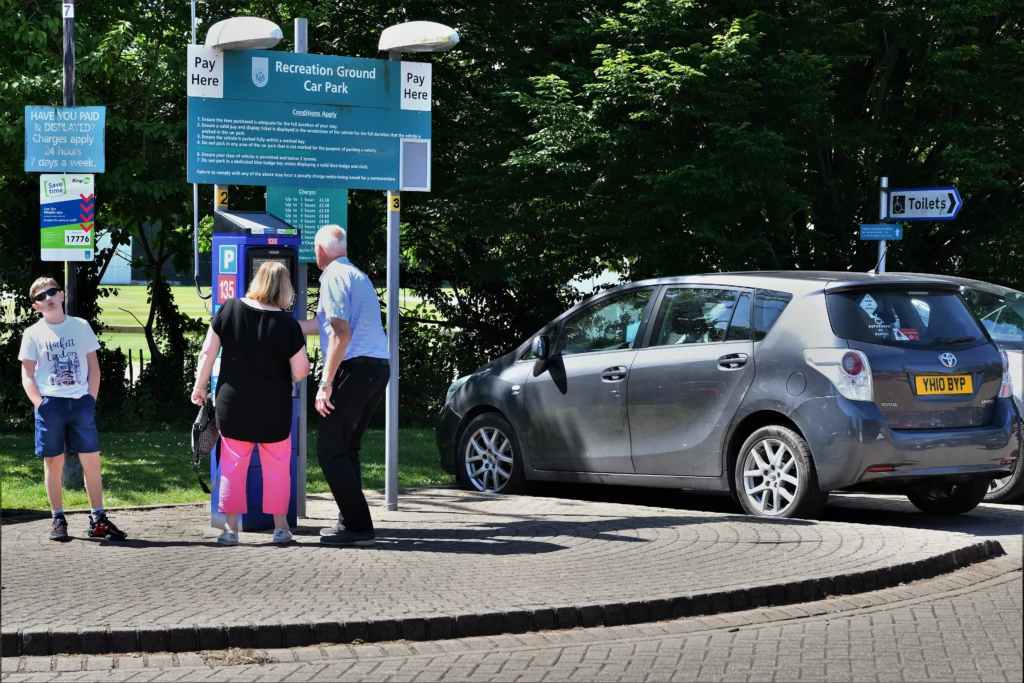
Got a parking charge in Stratford-upon-Avon even though you paid? You’re not alone. A post in a Stratford Facebook group this week drew more than 60 comments: a driver paid for an hour by phone, waited for a space, loaded the children back into the car, and a month later received a £100 charge because the car park’s cameras counted 71 minutes from the moment they drove in to the moment they drove out. Others replied with similar stories.
On this page
Here’s how to avoid it, how to tell what kind of charge you’ve got, and how to appeal.
First: is it a council fine or a private parking charge?
The two work completely differently, and the letter tells you which you have.
- A council Penalty Charge Notice comes from Stratford-on-Avon District Council (council car parks) or Warwickshire County Council (on-street parking). In the district it’s £70 or £50, cut to £35 or £25 if you pay within 14 days. If you disagree, the final appeal goes to the independent Traffic Penalty Tribunal.
- A private Parking Charge Notice comes from a parking company running a car park for a landowner. It’s usually £100, cut to £60 if you pay within 14 days. The final appeal goes to POPLA (if the firm belongs to the British Parking Association) or the Independent Appeals Service (IAS) (if it belongs to the International Parking Community). The letter will say which.
Our parking guide shows which car parks in town are run by the council and which are private, including NCP Rother Street, the private car park behind Rother Street Arts House and the station car park.
How to avoid a charge
- Read the signs at the entrance. They tell you who runs the car park and how your stay is timed. Many car parks use number-plate cameras, which time your visit from when you drive in to when you drive out, not from when you pay.
- Allow for the time it takes to park and leave. Finding a space, loading children or shopping and queuing to get out all count on a camera-timed car park. If you’ll be close to the limit, pay for the next band up.
- Check the details when you pay by phone. Make sure the location code on the sign and your number plate are right in the app, and keep the confirmation.
- Keep evidence. A screenshot of your payment, and a photo of where you parked and of anything that held you up (a blocked space, a broken machine), makes an appeal much easier.
The grace periods you’re entitled to
- Council car parks and on-street parking in England: by law, councils must allow 10 minutes after the end of the time you’ve paid for before they can issue a fine.
- Private car parks: the parking industry’s code of practice, which applies to firms belonging to the British Parking Association or the International Parking Community, requires a 10-minute grace period at the end of your paid stay, plus a “consideration period” when you arrive to find a space and read the signs. All new car parks have had to follow it since 1 October 2024, and older car parks have until late 2026.
So if a camera says you stayed a few minutes over, it’s worth checking whether those allowances were applied before you pay.
How to appeal a private parking charge
1. Appeal to the parking company first, within the time on the letter (usually 28 days). Explain what happened and send your evidence: payment confirmation, photos, and the grace and consideration periods in the code of practice. 2. If they reject it, appeal to POPLA or the IAS, whichever the rejection letter names. It’s free, and you normally have 28 days from the rejection. Send all your evidence at once: you can’t add more later. 3. Don’t pay if you’re appealing. Paying can end your right to appeal. 4. Don’t ignore it. Unpaid private charges can end up in the county court.
POPLA and the IAS are free and independent of the parking company. If you’re unsure, Citizens Advice has free guidance on parking charges.
How to challenge a council fine in Stratford
1. Challenge it informally within 14 days through the district council’s Penalty Charge Notices page or its Parking Portal. If you challenge within the 14-day discount period and it’s rejected, the council will usually let you pay the reduced amount. 2. If you get a Notice to Owner (normally sent 28 days after the fine if it isn’t paid), you can make formal representations. 3. If those are rejected, appeal to the Traffic Penalty Tribunal. It’s free and independent, and its decision is final.
For car park fines in Stratford-on-Avon District, appeals are handled for the council by Wychavon District Council: email parking.appeals@stratford-dc.gov.uk or call 01386 565009. For on-street fines, contact Warwickshire County Council on 0333 999 3332 or civilenforcement@warwickshire.gov.uk.
Questions
Does the clock start when I drive in or when I pay?
At car parks with number-plate cameras, usually when you drive in, and it stops when you drive out. Check the signs at the entrance. Private car parks following the industry code must give you a consideration period on arrival and a 10-minute grace period at the end.
Can RingGo fine me?
No. RingGo only takes payments. Fines come from the council or the private company that runs the car park, and that’s who you appeal to.
Is it worth appealing?
If you paid and the overstay was within the grace and consideration periods, or something outside your control held you up, yes. Appeals to POPLA, the IAS and the Traffic Penalty Tribunal are free.

Alex Harrington
Alex Harrington grew up in Stratford-upon-Avon and runs What's up, Stratford? as an independent guide to the town.