Stratford-upon-Avon is famous for its life – the bustling theatres, the lively markets, the enduring legacy of the Bard. But peel back the layers of our town’s history, and you find a story of devastating death.
In the summer of 1564, just three months after William Shakespeare was born, the plague arrived in Stratford. It tore through the town with terrifying speed, claiming roughly one-sixth of the entire population. It was a time of “Hic incipit pestis” (Here begins the plague), as the parish register grimly noted.
Today, we are walking the “Route of the Black Death” – identifying the locations where the outbreak began, where the victims lived, and where they likely rest beneath our feet today.
1. Ground Zero: The Garrick Inn (High Street)
Our grim tour begins at what is widely considered the outbreak’s source. Local history records suggest the plague started in the house of a weaver named Oliver Gunn, located near where the Garrick Inn stands today.
Gunn’s apprentice was the first to die on July 11, 1564. The infection likely arrived from London via cloth merchants. Within weeks, the sickness had jumped from house to house along High Street.
2. The Council’s Response: The Guild Hall
Walk down Chapel Street to the Guild Hall. In 1564, this was the seat of local government. As the death toll mounted, the Town Council—including William’s father, John Shakespeare—met here in emergency sessions.
Terrified of infection spreading indoors, the council actually held their meetings outside in the Guild Garden (behind the hall) to let the fresh air disperse the “miasmas.” It was here that John Shakespeare famously contributed money for the relief of the poor who were locked in their boarded-up houses.
3. The Dead House: Henley Street
Head over to Henley Street. We know it as the birthplace of William Shakespeare, but in 1564, it was a street of mourning. The plague was indiscriminate. It killed the rich and the poor alike.
While the infant William survived (miraculously, considering the mortality rate for babies), his neighbours were not so lucky. Several families on Henley Street were wiped out entirely. The registers show multiple burials from single households in the space of days.
“Hic incipit pestis” – The chilling entry in the Stratford Parish Register, July 11, 1564.
4. The Mass Graves: Holy Trinity Churchyard
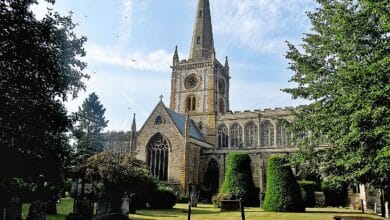
This is the most sobering stop on our walk. Follow the path to Holy Trinity Church. In normal times, burials were individual and respectful. But as the summer of 1564 wore on, the gravediggers could not keep up.
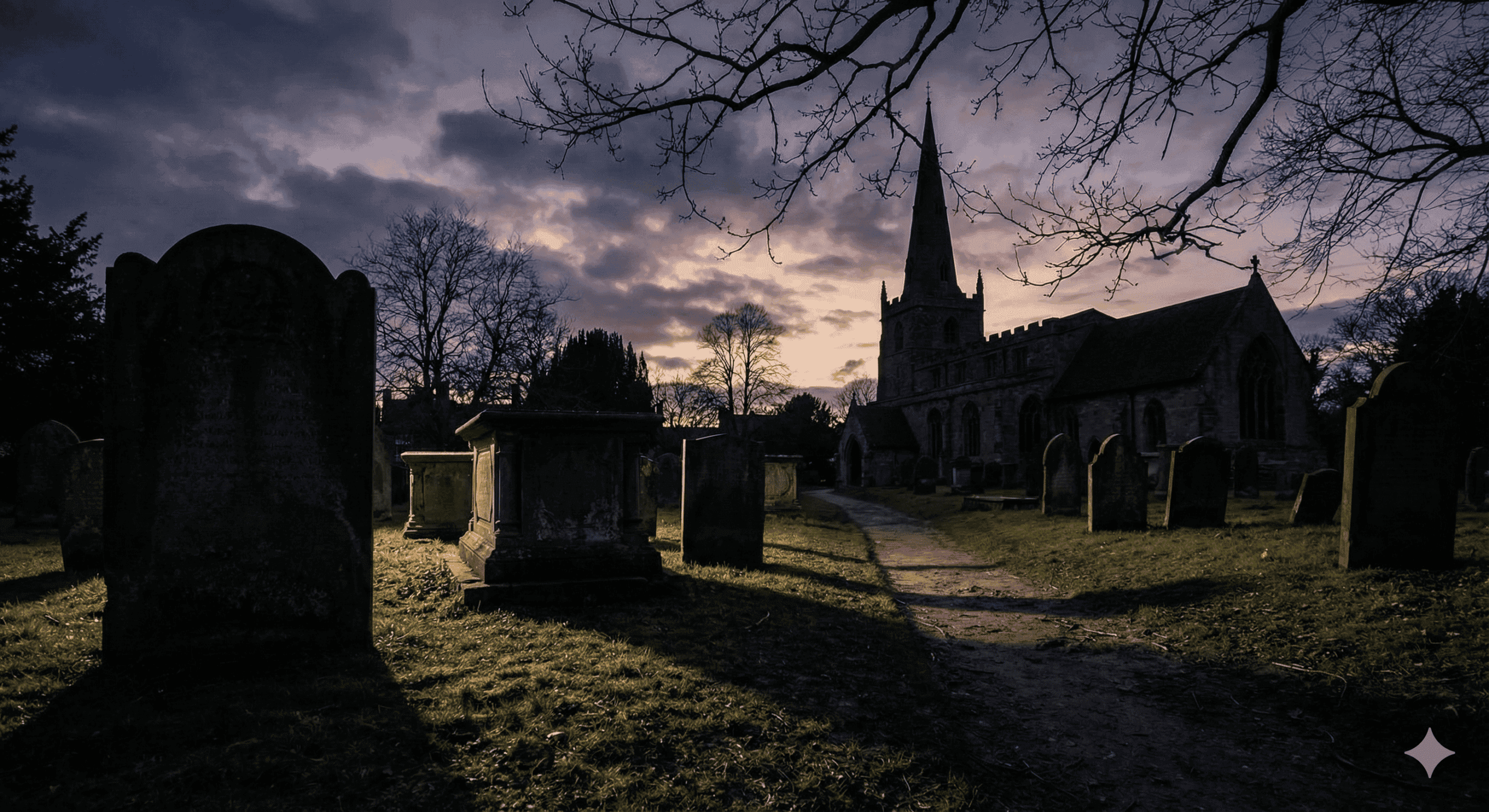
Though not marked with headstones today, archaeological evidence and historical practice suggest that plague pits—mass graves—were dug in the churchyard to accommodate the sheer volume of bodies. The specific location is unmarked, but as you walk the older, uneven parts of the churchyard near the river, you are likely walking over the resting place of hundreds of Stratfordians.
5. The Silent Survivor: Chapel Lane
Walk back up towards the town centre via Chapel Lane. This area was home to the large gardens and orchards of the wealthy. The lower density of housing here might have provided a firebreak against the disease.
It was in this area that William Shakespeare would later buy New Place, perhaps driven by a lifelong memory of the “pestilence” that shadowed his childhood. He would later lose his only son, Hamnet, to the plague in 1596—a tragedy that many scholars believe inspired the grief in Hamlet.
🚶 The “Plague Walk” Itinerary
A sombre but fascinating 30-minute route through history:
- Start: The Garrick Inn, High Street (Site of the first death)
- Walk to: The Guild Hall & Garden (Where the council met in fear)
- Head to: Henley Street (The Shakespeare Birthplace, a house of survivors)
- End at: Holy Trinity Churchyard (The final resting place)
Respect the history: When visiting the churchyard, please remember it remains an active place of worship and burial.