If you live in Stratford-upon-Avon, you likely have your blinkers on. You tackle the one-way system on Bridge Street, you dodge the day-trippers on Henley Street, and you rush to get your coffee.
But Stratford is a town built on layers of history – Roman, Medieval, Tudor, and Victorian -and sometimes, the most fascinating stories are hiding behind doors we ignore completely. We have walked the streets to document the entrances that most people walk past without a second glance.
From life-saving medieval rings to gateways that lead to secret gardens, here are the hidden doors of Stratford-upon-Avon.
1. The Sanctuary Knocker (Holy Trinity Church)
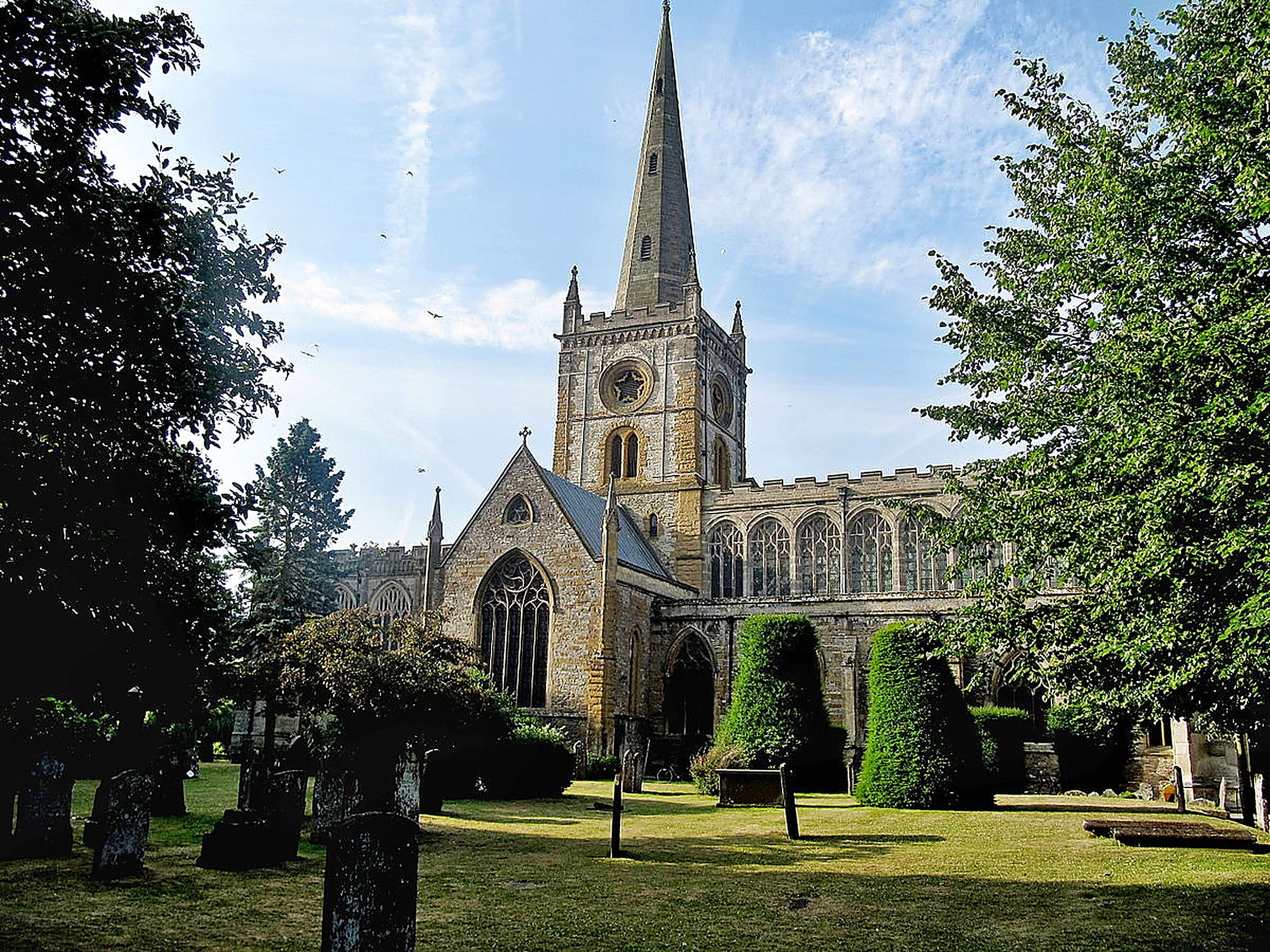
You might visit the church to see the Bard’s grave, but before you even get inside, stop at the heavy wooden porch door. Look closely at the iron ring held in the mouth of the grotesque face.
This isn’t just a handle; it represents a line between life and death. In the Middle Ages, this was a Sanctuary Knocker. Under English Common Law, if a fugitive fleeing the law could outrun the Sheriff and grasp this ring, they were granted “sanctuary” within the church for 37 days.
The Historian’s View
Once holding the ring, the fugitive—known as a ‘grithman’—would be given a black robe with a yellow cross on the shoulder. They then had a choice: stand trial or confess their crimes and “abjure the realm” (leave England forever). Thousands of lives were likely saved (or exiled) right where you are standing.
2. The “Witch’s Passage” (Shrieves House, Sheep Street)
Halfway down Sheep Street, next to the Tudor World museum, stands a daunting, dark timber archway leading into a cobbled alley. It looks foreboding, and for good reason.
This is the entrance to the Shrieves House barn complex. During the English Civil War, this alleyway would have been bustling with soldiers. It is widely rumoured to be one of the most haunted spots in England. The heavy oak doors here date back centuries.
The Hidden Detail: If you look at the timber beams inside the passage, legend has it that “witch marks” (ritual protection marks) are carved into the wood to ward off evil spirits from entering the dwelling.
3. The Door in the Wall (Avonbank Gardens)
If you walk past the RSC towards the church along the river, you’ll walk beside a long, high brick wall. Most people are watching the swans or the rowers, but if you look to your right, you will see a small, humble wooden door set into the brickwork.
It looks like a utility cupboard, but it is actually a private entrance to the Avonbank Gardens. This land was once owned by the Flower family (of the brewery fame), who were instrumental in building the theatre. The mansion is gone, but the door remains.
Where it leads: While usually locked, when opened for special events or maintenance, it leads into a “Secret Garden” space that offers a silent, walled-off perspective of the river, completely hidden from the crowds just metres away.
4. The Stage Door (Waterside)
To the left of the Royal Shakespeare Theatre’s grand public entrance is a much more unassuming, functional set of double doors. It’s easy to miss, but this is the membrane between the real world and the magic of the stage.
This isn’t just an employee entrance; it is the portal through which acting royalty passes daily. From David Tennant to Judi Dench and Patrick Stewart, they’ve all swiped a pass here. There is no red carpet, just a simple door on Waterside.
The Insider’s Secret
Look at the pavement outside this door. You won’t find Hollywood stars, but if you look closely at the brickwork of the theatre here, you can see the ‘seam’ where the charred remains of the 1926 fire meet the Art Deco rebuild of the 1930s.
5. The “Humility Door” of the Guild Chapel
On the corner of Church Street and Chapel Lane, the Guild Chapel dominates the skyline. But have you noticed the small, pedestrian door on the side, facing King Edward VI School?
This modest entrance was often used by the students (including a young William Shakespeare) for centuries. It is significantly smaller than the grand main entrance, forcing you to bow your head slightly as you enter—a medieval architectural trick to enforce humility before God.
Where it leads: Inside, you’ll find the “Death Reawakened” medieval wall paintings. Interestingly, it was William Shakespeare’s own father, John, who was paid to whitewash over these Catholic images during the Reformation. He didn’t destroy them; he covered them, inadvertently preserving them for us to see today.
6. The Harvard House “Market Entry”
On High Street, the ornate facade of Harvard House grabs all the attention. But look at the entryway. It is unusually narrow and set back.
The History: This house was built by Thomas Rogers in 1596. Rogers was a wealthy butcher and corn merchant. This narrow entry wasn’t just a front door; it was a defensible commercial entry. In the chaos of market days on High Street, being able to control who entered your home/business was vital.
7. The Old Thatch Tavern’s “Leper Window”
Okay, this is technically a window, not a door, but it served as a portal. At the Old Thatch Tavern on Greenhill Street (Stratford’s oldest pub), look for the small, strange window near the entrance.
Legend has it this was a ‘Leper Squint’ or a way for the ‘unclean’ or poor to be served ale from the street without entering the premises and ‘contaminating’ the patrons inside. It’s a sobering reminder of the social stratification of Tudor Stratford.
🚶 The Hidden Door Walking Route
Want to see them all? Here is the most efficient 45-minute loop:
- Start: Greenhill Street (Old Thatch Tavern)
- Walk to: High Street (Harvard House)
- Turn onto: Sheep Street (Shrieves House)
- Head to: Waterside (RSC Stage Door)
- Walk along river to: Avonbank Gardens (The Brick Wall Door)
- End at: Holy Trinity Church (Sanctuary Knocker)