Construction has officially begun on Stratford 46 Business Park. It marks a pivotal moment in the town’s history: a move away from reliance on tourism towards a future of advanced manufacturing and tech. But is the town ready for the change?
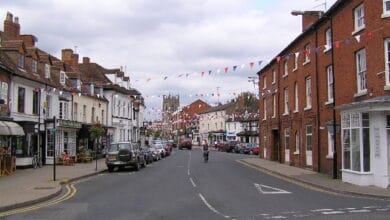
For centuries, the economy of Stratford-upon-Avon has relied on one man. William Shakespeare is not just a cultural icon; he is the town’s primary industry. From the hotels on the Waterside to the tea rooms on Sheep Street, the flow of money into the district has been dictated by the flow of tourists down the M40. When the sun shines and the theatres are full, the town booms. When the season ends, or a pandemic strikes, the town holds its breath.
But as of late 2025, a quiet revolution is taking place on the outskirts of the town that aims to change this dynamic.
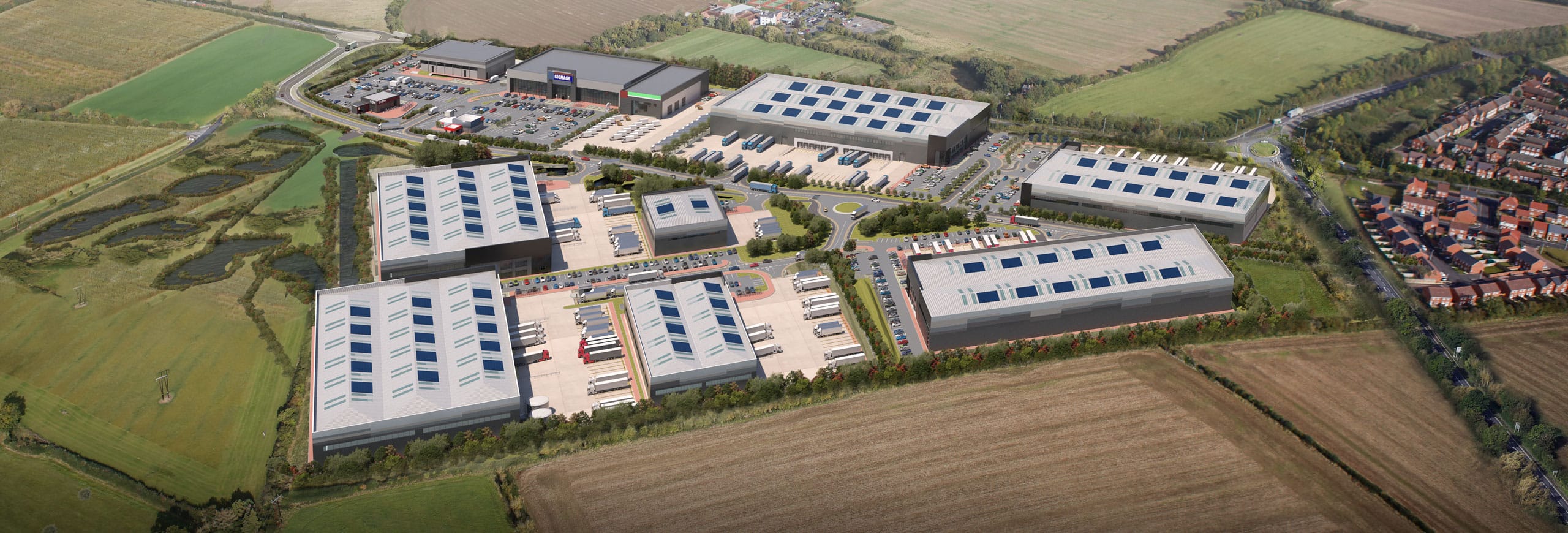
Work has officially commenced on Stratford 46, a massive new £140 million business park located strategically at the junction of the A46 and the Stratford Road. This isn’t just another collection of warehouses; it represents a fundamental shift in the identity of South Warwickshire.
The scale of ambition
The development, spearheaded by property giants IM Properties, is vast. Spanning nearly 350,000 sq ft in its initial phase, the site is designed to accommodate logistics, light industrial, and high-tech manufacturing firms.
While the bulldozers have been visible for weeks, the sheer scale of the project is only now becoming apparent to local commuters. The park is part of a wider vision to capitalise on the “Golden Triangle” of logistics in the Midlands, but with a specific Stratford twist: a focus on high-skilled employment.
Stratford 46 by the Numbers:
- Investment: £140 million estimated development value.
- Size: Capability for up to 1 million sq ft of commercial space upon final completion.
- Jobs: Projected to support over 500 permanent jobs in Phase 1 alone.
- Timeline: Phase 1 completion expected late 2026.
Why Now? The “two-speed” economy
To understand why this development is happening now, one must look at the economic scars left by the early 2020s. The pandemic exposed the fragility of Stratford’s visitor economy. When international travel halted, Stratford’s revenue stream dried up overnight, while neighbouring areas with stronger manufacturing bases – like Coventry and Solihull – showed more resilience.
Local councillors and economic strategists have long argued that Stratford needs to diversify. The “Vision 2030” papers circulating within the District Council highlight a need to retain young talent. For decades, Stratford has suffered from a brain drain. Students grow up here, enjoy the high quality of life, but leave for London, Birmingham, or Manchester to find high-paying graduate roles in tech or engineering.
Stratford 46 is the physical answer to that problem. By creating Grade A industrial space, the town hopes to attract spillover from the booming automotive and gaming sectors in Leamington Spa and Gaydon (home to Jaguar Land Rover and Aston Martin).
“There is no shying away from the fact that the pandemic has had a seismic impact on our economy… We are concentrating on trying to position the economy for the future. We need growth from the private sector or, unfortunately, we will all end up poorer.”
— Cllr Tony Jefferson, Former Leader of Stratford District Council
The Canal Quarter connection
While the developers have reported “strong interest” from national logistics firms, the first tenants are likely to be much closer to home. The development is a crucial piece of a local “domino effect” puzzle known as the Canal Quarter Regeneration.
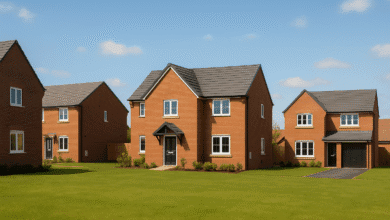
Stratford District Council has long-held ambitions to transform the current industrial strip along Western Road and Wharf Road into a new “Urban Living” quarter. The masterplan aims to deliver approximately 650 new homes in this riverside location.
To make way for this housing, existing businesses – from car dealerships to builders’ merchants – need somewhere to go. Stratford 46 has been designated as the primary “decant” site. So, while no specific brands have publicly signed on the dotted line yet, expect the first wave of occupiers to be familiar local names moving shop to clear the path for the town centre’s residential expansion.
The A46 Corridor: The New High Street?
The location of the new park is no accident. The A46 is rapidly becoming the Trans-Midlands Trade Corridor. With improvements to the Binley Flyover completed in recent years and ongoing works around the Stoneleigh junction, the A46 now serves as a vital artery connecting the M5 to the M1.
For logistics companies, Stratford is perfectly positioned. It allows distribution to 90% of the UK population within a four-hour truck drive. However, for local residents, the reliance on the A46 is a double-edged sword.
The Traffic Concern
If there is one topic that rivals the weather in Stratford conversation, it is traffic. The Bishopton roundabout and the Marraway have long been pinch points. Residents in the northern suburbs – particularly around Bishopton and the Avenue Farm estate – have expressed valid concerns about the influx of Heavy Goods Vehicles that Stratford 46 will bring.
Planners insist that the infrastructure upgrades included in the planning permission will mitigate the impact. There are promises of “smart signalling” and dedicated HGV lanes to keep commercial traffic off local roads. Yet, with hundreds of new employees commuting to the site daily, pressure on the road network remains the primary objection to the scheme.
Green business in a green town
Aware of the environmental sensitivities of building on the edge of a historic market town, the developers are pushing the sustainability angle hard.
The buildings at Stratford 46 are being constructed to BREEAM Excellent standards. The plans include:
- Rooftop solar photovoltaics (PV) as standard for all units.
- Electric Vehicle (EV) charging stations for 20% of all parking spaces immediately, with infrastructure for 100%.
- New cycle ways connecting the business park to the Stratford Greenway, encouraging workers to cycle from the town centre rather than drive.
This aligns with Stratford District Council’s ambitious Carbon Reduction goals. The aim is to attract forward-thinking companies that value green credentials – specifically targeting the “Green Tech” sector, which is looking for homes outside of the crowded city centres.
The future: Silicon Stratford?
So, what will Stratford-upon-Avon look like in 2030?
If the strategy behind Stratford 46 succeeds, the town will operate on a dual engine. The cultural heart will remain on the banks of the Avon, preserving the heritage that draws the world to our doorstep. But on the periphery, a new engine of growth will hum – one built on logistics, engineering, and digital innovation.
This diversification offers a buffer against future economic shocks. It provides a path for local graduates to return home. It signals that Stratford is open for business.
While the arms of JCBs dominate the skyline on the Birmingham Road might be an eyesore to some, to others, they look like the future. The town is finally writing a new play, and for the first time in 400 years, William Shakespeare isn’t the lead character.
What do you think? Is the expansion of industrial parks good for Stratford, or should we protect our rural boundaries? Join the debate below.