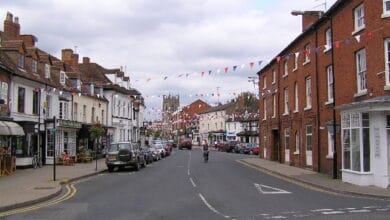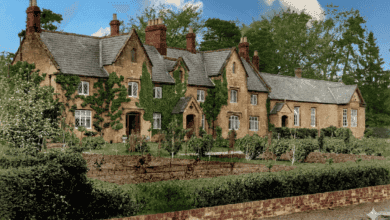
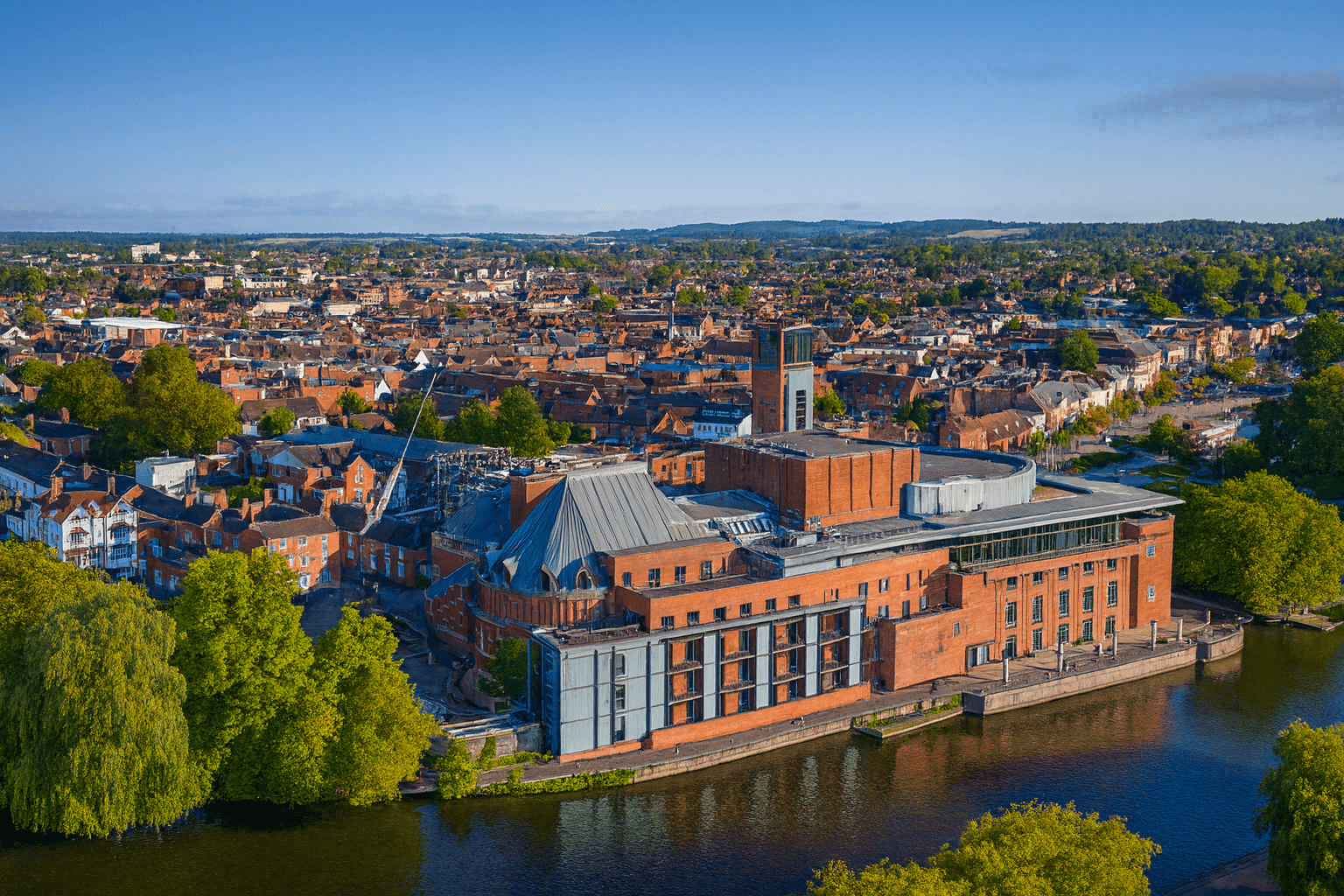
A new draft vision for Stratford-upon-Avon’s town centre is being put to residents, setting out ideas for greener streets, a stronger arts scene and easier ways to get around the historic riverside town.
The Stratford Town Centre Strategic Partnership – a group bringing together key public, private and voluntary organisations – has published a document called A Vision for Stratford-upon-Avon and is now asking people who live and work in the town to help shape what happens next. The draft, agreed in October 2025, is intended to guide future projects rather than sign off specific schemes.
What is being proposed
The Partnership wants Stratford to “punch above its weight” as a kind of small city for work, culture and leisure, while remaining “a town for everyone”.
Four main themes sit at the heart of the vision:
- Town Centre Evolution – a greener, better-connected centre with more people living above shops, tidier shopfronts, new markets and clearly defined “community zones” with their own character.
- Creativity & the Arts – a “Shakespeare +” offer, with art and performance in everyday spaces, a long-term arts strategy and a large-scale festival-style event.
- Great Vibe, Fun Place – more use of outdoor spaces for markets, street entertainment and riverside activity, plus a stronger evening and night-time economy.
- Ease of Movement – a town that is easier to walk and cycle around, with better public transport, a clearer parking strategy and less heavy traffic through sensitive streets.
Underlying it all is a commitment to “evolution not revolution” – keeping what people already love about Stratford while making it easier to live, work and visit.
What objectors may worry about
The document itself does not list objections, but some of the ideas are likely to raise familiar questions locally.
Plans to pedestrianise key streets such as Bridge Street and High Street and to move more traffic to Park & Ride sites could worry residents who rely on driving into the centre, traders concerned about deliveries, or blue badge holders who need close-up parking. Traffic will still be able to move down these sections, but will be limited.
Suggestions for a busier night-time economy, including late-night shopping and more evening events, may be welcomed by some but prompt concerns from others about noise, litter and anti-social behaviour.
Changes to parking patterns, new bridges and weight limits on Clopton Bridge are also the kind of transport proposals that, in Stratford, tend to divide opinion along lines of congestion, convenience and cost.
What supporters and the Partnership say
Supporters argue that the town needs to be bolder if it is to stay competitive and attractive.
The Partnership talks about making Stratford “a centre of creativity for the region” and a place where residents and visitors enjoy a “fantastic experience”, not just a quick photo at Shakespeare’s Birthplace. Proposals for more trees, green walls and roofs, new farmers’ and indoor markets, and a community arts hub are pitched as ways to bring life back into quieter corners of the town.
On the vision document, the Partnership says: “Initial ideas are now being brought to the public to ensure that the direction of future development truly reflects the needs of the people who live and work here.”
It also stresses that the town must work for locals as much as for tourists, promising to “deliver for locals as well as for tourists, making Stratford-upon-Avon a great place for residents to live, work and study.”
What has been decided – and what happens next
No individual planning application has been approved as part of this process. Instead, the Partnership has agreed a high-level vision and four themes to guide future decisions and funding bids. The document will now go through public consultation, with residents, businesses and community groups invited to comment.
Following that, the strategy is expected to be revised and used as a framework for future projects – from detailed transport plans to arts events and public space improvements.
For local people, the main impact in the short term is an opportunity to influence what gets prioritised. In the longer term, the vision will help shape how Stratford’s streets, green spaces, traffic and cultural life evolve over the coming years.
Proposed Stratford-upon-Avon changes
- Create and use a shared town vision
- Use A Vision for Stratford-upon-Avon as a framework to guide future decisions and funding bids.
- Regularly review and refresh the strategy as the town changes.
- Run public consultation
- Take the draft vision and ideas out to residents, businesses and community groups.
- Amend the document in response to community feedback.
- Strengthen partnership working
- Keep the Stratford Town Centre Strategic Partnership meeting regularly, coordinating between public, private and third sector organisations.
- Use this group to ensure schemes are “highly informed and joined up from an early stage.”
Theme 1 – Town Centre Evolution
Physical / spatial changes
- Town centre masterplan
- Develop a town centre Masterplan based on interconnected community zones, each with its own discrete identity (shopping, leisure, eating, meeting, recreation, etc.).
- More town centre living
- Encourage living above shops and offices to bring more life back into the town centre.
- Greener streets and buildings
- Plant more trees.
- Increase greenery generally, including green walls and green roofs.
- Create central quiet spaces for peaceful reflection away from busy streets.
- Markets
- Facilitate a high-standard farmers’ market on a traditional market day, selling affordable local produce.
- Provide an indoor market area that offers something different to the standard high street.
- Shopfront and streetscape improvements
- Improve dilapidated shop fronts, prioritising empty or run-down units at key entrances to the town.
- Signpost and support outdoor ‘quiet spaces’ in central locations.
Theme 2 – Creativity & the Arts (“Shakespeare +”)
Strategy and structures
- Create and deliver a long-term arts & culture strategy
- Led by community and visitor needs.
- Develop new ways to attract investment and support from national and local government.
- Community arts hub(s)
- Establish centrally located community arts hub(s) where:
- Freelancers can make, exhibit and perform affordably.
- Residents can drop in and children are catered for.
- A “festival in a building” runs across multiple arts disciplines.
- A “music hangout” for young people is provided.
- Establish centrally located community arts hub(s) where:
Day-to-day arts activity
- Art everywhere
- Use open, empty, usual and unusual spaces across the town for arts activity.
- Embed creativity as part of the town’s “DNA”, accessible rather than elite.
- Aim for a “fringe festival” atmosphere.
- Regular creative events and formats
- Open access creative workshops.
- Arts events and festivals.
- Live street music.
- Arts-based day and night events.
- Fringe theatre, installations, creative trails and similar.
- Large-scale arts event of national significance
- Stage a regular large-scale arts event involving all arts disciplines.
- Close the town to cars to open it up to community and visitors.
- Encourage participation from all residents, including involving every school child.
Theme 3 – Great Vibe, Fun Place
Use of outdoor space & public realm
- Better use of outdoor spaces
- Outdoor theatre and events.
- Street music and entertainment.
- Temporary “parklets” (mini green/social spaces in parking bays or small areas).
- More places to sit and meet.
- Farmers’ markets and artisan crafts markets.
- Festivals.
- Specific features as part of the Bridge Street / High Street pedestrianisation scheme.
- More use of the river
- Increase on-water and by-water activities along the river.
- Use the whole length of the river through town, not just the central stretch.
Retail & vacancy
- Improve shopping offer
- Encourage more independent food shops, such as:
- Delicatessens.
- Bakeries.
- Fresh fish, meat and vegetable retailers.
- Encourage more independent food shops, such as:
- Use of underused retail spaces
- Make better use of underused shops through pop-up schemes, providing varied and frequently changing offers.
Night-time economy & facilities
- Build a stronger night-time economy
- More after-hours activities, including:
- Tapas-style café culture.
- Late-night shopping.
- A night club.
- More after-hours activities, including:
- Toilets and accessibility
- Review the quantity and quality of Changing Places toilets and public toilets.
- Develop a plan to ensure an adequate number of accessible facilities.
Visitor experience & youth
- New visitor centre
- Build a world-class, “not-just-Shakespeare” visitor centre:
- Featuring the town’s social history.
- Designed to be experiential.
- Build a world-class, “not-just-Shakespeare” visitor centre:
- New youth hub
- Develop a new youth hub with better facilities for young people.
- Created with and led by young people themselves.
Theme 4 – Ease of Movement
Transport planning & streets
- Multi-modal transport plan
- Develop a multi-modal transport plan integrating with building and land-use planning.
- Create shared spaces and remove vehicles where possible.
- Provide viable alternatives to car travel.
- Ensure continued provision for blue badge users in the town centre.
- Walking and cycling
- Facilitate easy walking and cycling routes between:
- Housing.
- Town centre.
- Schools.
- Train station.
- Leisure centre.
- Create a pedestrianised core.
- Provide more joined-up cycling infrastructure.
- Facilitate easy walking and cycling routes between:
- Bridge Street / High Street
- Progress the Bridge Street / High Street pedestrianisation scheme to “breathe new life” into this focal area.
- New bridge and HGV restrictions
- Build a new bridge.
- Introduce a weight limit on Clopton Bridge to remove HGVs from the town centre.
Parking, Park & Ride, and public transport
- Joined-up parking strategy
- Design “outer” parking for long stays and day trips.
- Use “inner” parking for short stays.
- Increase use of the northern Park & Ride.
- Build a new southern Park & Ride.
- Public transport
- Encourage more bus and train use by:
- Supporting regular, reliable services.
- Providing easily accessible, live transport information.
- Encourage more bus and train use by:
- Sustainable transport
- Increase provision of public Electric Vehicle (EV) charging points (mentioned in the narrative under this theme).